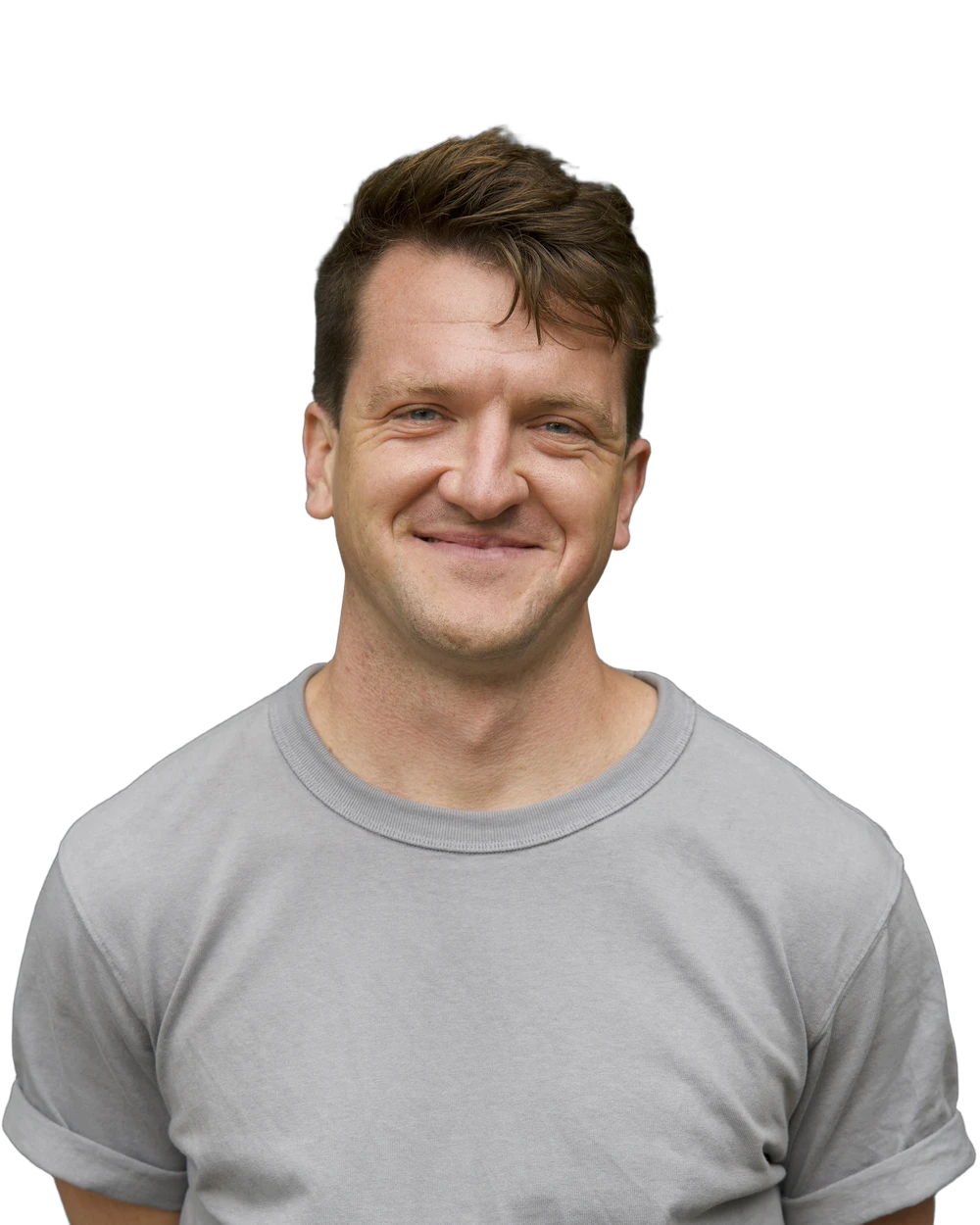
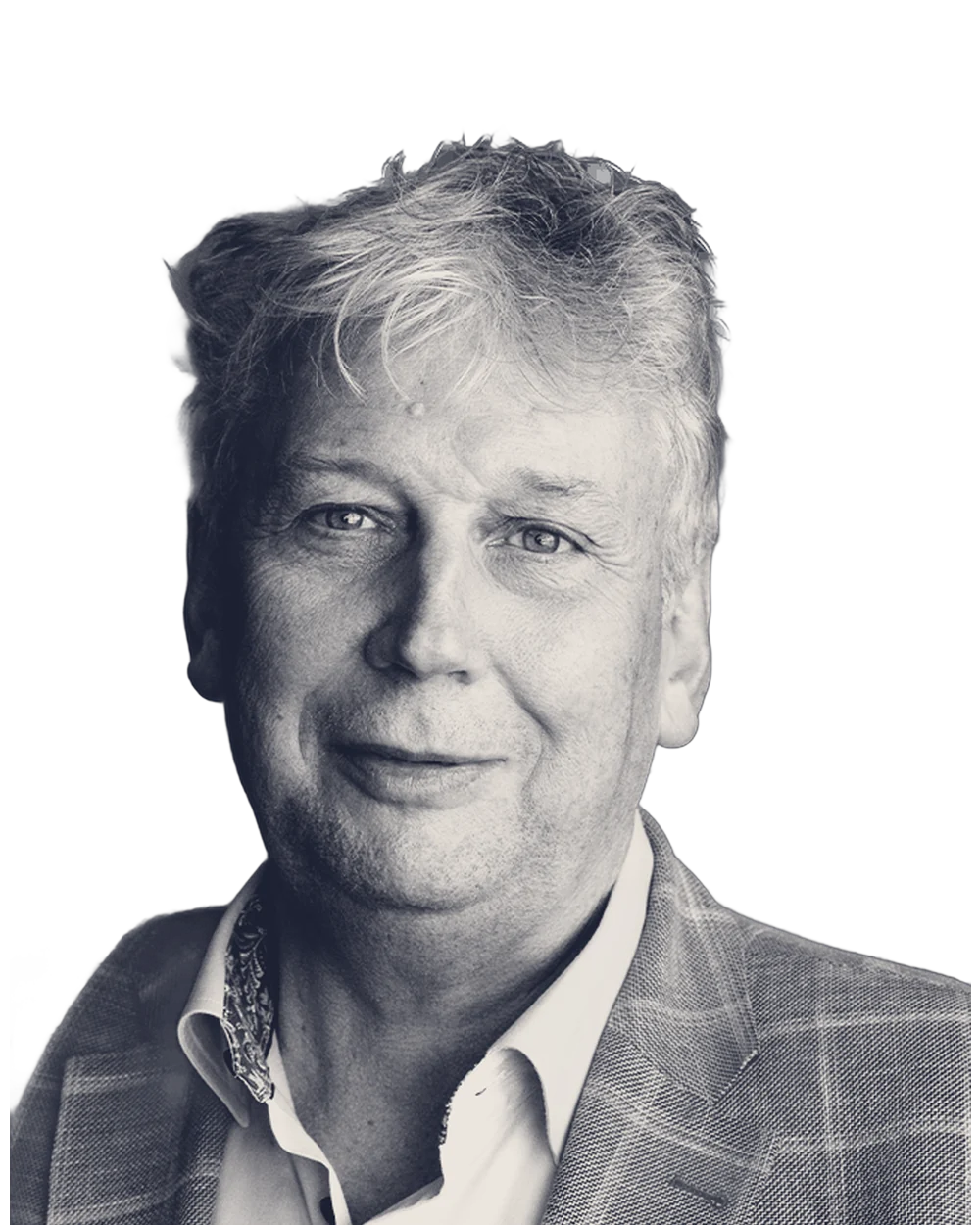
How a Startup Won Over 5x CrossFit Games Champion Mat Fraser

Also onYouTube
Raising? See who backs companies like this: the investor map
Myoform co-founder Theo Wiley on winning over Mat Fraser by giving first, why a documentary beat Facebook ads, and the seven intros to Jamie Murray.
What you'll learn
- How Myoform won over Mat Fraser by putting his whole HWPO team through the product first, at its own cost.
- What Mat's genome showed about the back injury he had as a young weightlifter.
- Why Myoform made a film instead of chasing Facebook ads, and why IM8's cost per customer has tripled.
- Why Theo chose not to lead with founder content.
- How to sell a category that doesn't exist yet, and why this business wouldn't have worked in 2018.
- Filing a patent as a small startup, and raising too early or too late.
- The seven intros to Jamie Murray, the no-shame gene and why the best deals start with getting on a plane.
Get the next one in your inbox
One email a week on what founders like Theo Wiley are learning, plus the investor map and every playbook. Free.
Questions this episode answers
How can a small startup land a partnership with a famous athlete?
Give first and do your homework. Theo Wiley, co-founder and CEO of Myoform, met Mat Fraser's co-founder at a conference, then put Mat and the whole HWPO team through Myoform's whole genome sequencing at Myoform's own cost, with no guarantees. That early investment in the relationship led to the partnership and the documentary.
Why would a startup make a documentary instead of running Facebook ads?
People need to feel something before they trust you. Theo says Myoform asks customers for sensitive health data, so ads with no brand behind them are unlikely to work. He recalls IM8's blended cost to acquire a customer rising from around $100 to about $305, as paid channels reach wider, less ready audiences.
How do you market a product in a category that doesn't exist yet?
Educate first, then spend on ads. Theo says genetic testing stalled after 23andMe because people couldn't see a use for the data. Whole genome sequencing has dropped from over $1,000 to around $200 at lab level, so Myoform's job is to show what genetics can tell you, build trust, then push paid spend.
Should a small startup file a patent?
It can pay off if you can see the category coming. Theo says Myoform applied in 2021 for a systems and methods patent in the US, UK and EU, covering how it turns genetics, bloods and wearable data into one personalised formula. It was expensive while bootstrapping, and the application is still in process.
How should a consumer health brand raise money when VCs want AI?
Find strategic angels who open doors. Theo says Myoform raised an angel round and was raising again when we recorded, after venture conversations came at the wrong stage. One investor, the tennis doubles player Jamie Murray, came seven introductions down a chain that started with a friend in finance. He also credits founder networks and events.
About Theo Wiley
- Public launch, January 2026
- Opened to UK and US customers on 19 January 2026, after a soft launch to a waitlist of more than 1,000 people (Fitt Insider)
- HWPO partnership
- Commercial partnership with HWPO, the training app founded by five-time CrossFit Games champion Mat Fraser, announced October 2026 (Fitt Insider)
- 400,000+ views
- Genetics of a Champion, Myoform's documentary with Mat Fraser, on YouTube (YouTube)
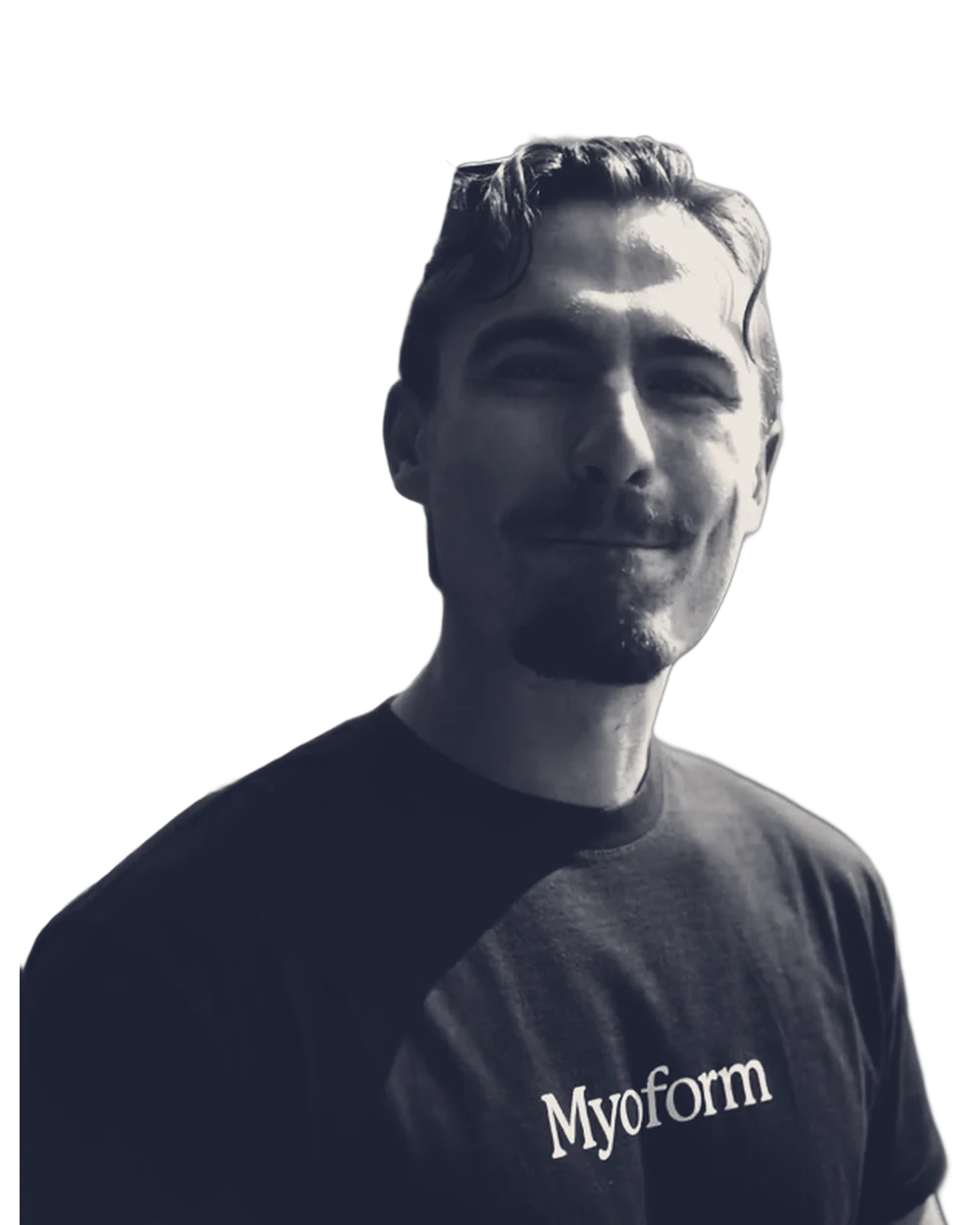
Theo Wiley is co-founder and CEO of Myoform, which sequences your whole genome, adds your bloods and wearable data, and makes a supplement just for you. Before Myoform he worked at Sano Genetics, a venture-backed UK startup, selling into biotech and pharma. Myoform launched publicly in January 2026. In under a year it has made Genetics of a Champion, a documentary with five-time CrossFit Games champion Mat Fraser that has passed 400,000 views, partnered with Mat's HWPO, and raised investment from Jamie Murray.
MyoformGenetics of a Champion, the documentary with Mat Fraser
Transcript
Read the full conversation
Intro
Will: Today on Healthier. How a startup with no track record won over one of the best athletes of all time. It's Theo Wiley from Myoform on Healthier. Myoform sequences your whole genome, adds your bloods and wearables, and then makes a supplement just for you. It launched publicly this January, and in under a year, they've made a documentary with Mat Fraser that's got over 400,000 views, and they've raised investment from the likes of Jamie Murray. Learn from Theo how to build an early stage brand, how to escape the paid ads rat race, and how to punch way above your weight with partnerships.
What Mat Fraser's genome revealed
Will: You've done a documentary of the biggest name ever in CrossFit. How's that going?
Theo: I was surprised that no one had told his story before. I think because of him being such a big star, people have got snippets of his story from the yearly or annual CrossFit Games documentaries, or the YouTube content that he puts out, but no one has done this really full, put together documentary. So we kind of proposed to them as a part of this partnership that we're doing with Mat and HWPO, his training programming company that he set up and co-founded post, post-retirement. And so we got connected up to him. We took him and his team through the process of Myoform, so we took them through a full kind of whole genome sequence. And really the general premise of the series, the genetics of a champion, which will be kind of an ongoing series for us at Myoform, is we have this really unique angle, I suppose, that we're able to tell as a brand in terms of the story or storytelling with athletes, because we can see under the proverbial hood in terms of into the biology of many of these incredible athletes. So imagine you could tell the story of Michael Jordan or Tiger Woods, but with the understanding, yes, they had this shaping through their childhood of these opportunities that made them into the athlete they were, but also there's very clearly some things that they were naturally inclined towards. So being able to share that information with the audience that perhaps people had never seen before, like in Mat's case. He's the son of two former Olympians. His parents were Olympic figure skaters for national champions for Canada, and then eventual Olympians. He took to Olympic weightlifting very quickly himself at the age of 12. I think he started competing on the national level, ended up being on the US men's national team, and subsequently broke his back. And we kind of uncovered this really interesting insight that he already had this lower back injury risk sort of baked in to his genome early on. So had he known about that, maybe his career could have looked a little bit differently. And then obviously, as a CrossFit athlete, looking at his childhood, all the things that he was doing from a behavioral perspective, the way that he was brought up, but then also genetically speaking, how adaptable he was to all these different kind of training styles. It's a really fascinating way to be able to tell a story of an athlete.
How a startup won over Mat Fraser: giving first
Will: Let's start off with, when you pitch this, you are an amazing startup scale up, but you are still, compared to what he's doing, newer kids on the block. Do you go to him, his team with, hey, what about if we, and it's like this kind of big grand vision of we could do a documentary together, but not much more? Or do you go in having done a bunch of homework?
Theo: I cut my teeth from a career perspective in sales and kind of business development and commercial. So, you know, going into a conversation with a decent amount of background research and a clear ask, I think is really clear. So with all that being said, this kind of storytelling angle that we took with Mat was we got connected up to his co-founder. I've obviously been in the CrossFit world myself as a fan for years and years. So Mat is probably one of those, one of the five people in the back of my mind that I was thinking about from the beginning of I would love to be able to tell that guy's story. He's a fascinating character. And so I was in the right room at the right time with the right person and we ended up getting talking. And then we invested in the relationship early by kind of getting their whole team to go through the process. And the only reason why that works ultimately, I think, or I believe is because we have a fantastic product and it's not expensive for us. Sorry, it's not cheap for us to give away our product for free 'cause we've run whole genome sequencing and things like that. So we invested quite a bit in their whole team early in order for that to happen, but with no guarantees, right?
Why a documentary instead of Facebook ads
Will: I've got so many questions, mate, because it's such a cool move. I don't know, like for a lot of people, it's more logical to just go and chuck a bunch of money into Facebook ads and kind of do us versus competitors or go and clone a bunch of ads.
Theo: I want people to feel something about Myoform as opposed to them just clicking on a Facebook ad and being like, "Okay, cool, I'm gonna try this supplement for a couple of weeks." And I don't think that that necessarily helps to retain customers long-term. You get people in through the door, but fundamentally, how do you encourage people to stick with you? How do you create kind of a relationship with your customer? And as an early stage brand, to your point, the playbook right now is creators, it's influencers, it's running performance and media. But actually, if you look at the last sort of eight to 12 months or maybe 24 months with some of the players that have popped up, your Grüns and IM8s, et cetera, the cost to acquire customers on a relatively cheap-ish product on the front end, it's gone up significantly.
Why IM8's cost per customer tripled
Theo: Like IM8 is an example in one of their public filings. I think the numbers are something like $104, $100 to acquire a customer on the front end on Meta. And now it's gone up to, or across, kind of blended, across many different channels. And now it's gone up to kind of $305 to acquire a customer. So it's such a massive growth point. And part of the reason for that is the algorithm works by you. It starts by kind of finding those customers that really fit your ICP. And so the cost is quite low. And then as you go on as a brand, your cost per acquisition grows with those kind of channels because the algorithm is constantly having to go wider and wider and wider to find an audience that does purchase your product. But it just costs more to acquire them because they're less ready as an individual. So you hear people like Alex Hormozi talk about this. A lot of people hit this kind of sticking point when they're at 5, 10 million in revenue where they've effectively become a media arbitrage business, right? Where they're paying to acquire those customers. But once you turn that media machine off, the kind of customer acquisition cycle decreases significantly. So everyone then goes, "Okay, now I need to focus on brand." So for our perspective, I don't think it's an either or all conversation, by the way. I think it's, you've got to do both. And without building enough brand on the front end, running ads without any brand recognition isn't going to be effective either. So we kind of have to start with this thought of how do we create enough of a recognizable brand and also work with these amazing people that then build trust in our audience. 'Cause fundamentally as a business, we're asking people to hand over quite sensitive health data. And so if we're running ads and just not really building any trust with our consumers, then we're unlikely to have much luck with running performance media.
Why we didn't do founder-led content
Will: One of the adjacent things that I see quite a lot is doing the founder behind the scenes YouTube stuff. And so we might have that whole thing of building the brand. And for people like Ross at Cadence and George at Represent, that's gone incredibly well. I sometimes see stuff and feel almost a bit sorry for people where they've clearly spent a bunch of money. They've got a videographer to follow them around. They've got the ads edited beautifully. And the views just kind of aren't there.
Theo: It's part of the reason why we went down this channel rather than the extremely founder-led content. Don't get me wrong, we do some founder-led content. I just don't think I'm remotely interesting enough. Obviously you want to tell your story as you go, but also I'm not, I think that the trend now is you've got to be like an athlete and a founder and you've got to be running sub three hour marathons or 2:40 marathons and that. I don't think I necessarily have as much, I'm not as cool as some of those guys, let's say. So a lot of it was like, what story can we tell through the brand and through the products that we have that not many other people can tell as an angle? 'Cause I think to your point, there are so many founder-led brands right now. Salt is a great example. They built an amazing audience, done really well. You've got Cadence, the very founder-led and then you've got 24/7. You've got a bunch of others that have kind of built a brand like Nick Bare as an example as well. He built his entire brand off the back of his personal brand and through YouTube and content. But we don't necessarily have the luxury of having that background with myself. So we wanted to just approach it a little bit differently and I think there's some cool stories we can tell and obviously building a brand is interesting too, but there's also a question of trust. When you're an early stage business, again, we're asking people to trust us with health data and all this kind of stuff. So showing the really dirty stuff of the early stage company, for us, we recognize that it's probably not the right angle to tell the story at because we don't want to create the impression that we're scrapping around with data because we aren't. And it's, we wanna build trust with our audience by attaching ourselves candidly to really amazing, trustworthy people. And that's how you build an audience these days if you don't have necessarily as well capitalized to just blast ads over people and get your face out there.
Selling a category that doesn't exist yet
Will: The other thing is that you've not come into a category that was particularly well established, I would say. You are also selling to a customer that might not already be doing this. Does that change how you think about marketing and selling?
Theo: Definitely, I think the angle that we have to take, and again, as you say, like compliments to everyone else for building incredible businesses, but one thing that kind of frustrated me in the supplement space more generally speaking is like innovation is adding creatine to electrolytes these days or like having a new flavor as opposed to really taking a different angle at it. And in a sense, we're creating a new category. So we have to address it in a slightly different, with a different approach because the market right now for genetic sequencing, for instance, had a little bit of a burst 10 years ago with 23andMe, but it's trudged along 'cause people couldn't quite figure out the use for the data as much. Whereas now we have such great data, but people aren't yet aware of it. And you look at a market like the blood testing space, particularly in the US, Function Health launched two years ago and they just got valued back in 2025 this time last year at $2.5 billion because they've done something like 50 million tests by that stage. So my take with genetics is that they're very well-capitalized businesses, right? And they've been able to really drive that. And that's why you've seen this massive explosion of blood testing and people getting more familiar with wearables and this convergence on this kind of health OS. But genetics, our kind of thesis and take is that genetics is gonna have that same pathway. But we're kind of, in terms of whole genome sequencing is now low cost enough for people to do it, for a normal person to afford to sequence a whole genome. I think a year or two ago, it was over $1,000 to sequence one person. And now it's down to around $200 a whole genome at the lab level. And so it's now at a point where the technology has enabled it to be cheap enough to be done at scale. What people don't realize with genetics is you can get so much more from genetics outside of the kind of things you'd understand from blood testing. And so the kind of way we've addressed it is we've got to educate people first on the value of genetics. And then once we build that trust up that there's some real value in that data set, then we can start to push more of the paid spend aspect. But unfortunately, the pathway that 23andMe took with some of the bad press around it kind of shot the industry a little bit. But my take is the next three years is gonna be a huge boom because now it's possible to do at scale and the data is such, there's so much more data that we can use to inform people of their biology.
Why this business wouldn't have worked in 2018
Will: Was that bet one that you were making then when you first started the company was looking at some of these market forces and bigger forces and saying, "Hey, we might be a little early, but kind of good early. And let's go into this when it costs a couple of thousand bucks, knowing that before long it's gonna be a hundred bucks." And how did you spot that?
Theo: Yeah, if we were to run this business back in 2018, it wouldn't work, candidly. I just think the market wasn't ready. The blood testing market hadn't even kind of taken off then. But now it's growing, you know, 20 plus percent per year. But if we tried to do in 2018, there were a few personalized supplement companies back then. But I think the things that, you know, which have since some of them did well, there's companies like Persona in the US, there was Care/of. Persona got acquired by Nestlé, Care/of, I think got acquired by Bayer, I wanna say. There's plenty of these small acquisitions that were done that were reasonably successful. But I think the challenge that they had, many of them were just either quiz orientated and you get a couple of capsules in a daily pack, or there was some at-home finger prick blood testing. But again, they were a little bit too early to the party where people weren't as familiar with doing at-home testing kits. And if you've ever done a finger prick at-home blood testing kit, it's a bit of a mess and you're milking your finger for 10 to 20 minutes and having to have a hot shower and fasted. So it's high friction. Whereas now you have Tasso and things like that, that it's making life a lot easier. So I think we would just really struggle back in 2018. But now one thing that we saw happening was during COVID, really, this kind of spike in people getting more familiar with supplements as well, getting more familiar with wearables and investing the extra cash that they had sitting over into those kind of wellness things, because people were suddenly thinking much more about their health. And we submitted our patent back in 2021, or patent application back in 2021, because we saw this starting to happen. And genetics was kind of part of this cycle that we could project out as the growth year-over-year was picking up even with the 23andMe disaster. And so, yeah, we took a punt that we believed that that was the route things were gonna go. And over the last couple of years now, we've really driven it. I think it's prime opportunity now versus even two years ago, I think it would have been harder to do without a significant injection of capital. Whereas now, I think people are much more educated about this space, thanks to social media.
Healthier Notes
Will: Hey, I write Healthier Notes every week. It's an email that helps you to grow your business in health, fitness, and wellness. I'd love for you to get it. Head to healthierco.com and sign up.
Filing a patent as a small startup
Will: You just said a word that would make a lot of founders' hair on the back of the neck stand up, which is patent. So you've chosen to take a kind of more difficult path. I'd love to dig into that a little bit.
Theo: So we submitted a patent application across the US, UK, and EU, less for the supplement specifically, because formulation in the supplement space, as I say, innovation, I guess is a weird word in the supplement space, 'cause there's realistically only a handful of really clinically effective products out there, so we definitely didn't wanna just go here. Here's a formula that we believe in, and let's put a patent and proprietary formula and slap it on and then convince people that it must be doing something good for them. For us, we went down the route of, how do we take all of these apparently disparate data sets, genetics, bloods, wearable data, biometrics, and amalgamate them into a personalized formula for an individual. So it's a system and methods patent that we were submitted for, still kind of in process, that we're super confident that it will be executed and in principle, as soon as we get that, then we're one of, if not the only company in the world that can formulate completely N of one level of supplements. I think we have to take this gamble that this is gonna be a category. I have zero doubt that the next five years, there's gonna be tens if not hundreds of kind of personalized supplement brands out there, and we submitted for that IP because we started to see the rumblings of it happening, and it's just a question of when the technology was scalable enough to get there. So it wasn't a fun process, it was expensive, especially bootstrapping at the time, but I think we took the right move and now we're in a really good position that if anyone else wants to move into the space, they're gonna have to go through us.
Raising too early, or too late
Will: Are there any other key moves in the life of Myoform, looking back, feel like pivotal, kind of right calls?
Theo: But I think if we could go back even two or three years, it would maybe be raising earlier a bit of capital before we even kind of went to market, cause I think we could have got even more of a headstart at the time.
Will: How have you capitalised the business so far?
Theo: So we raised an angel round last year and we're in the midst of the fundraise right now. So it's, I think especially with the AI boom, the amount of capital floating around, I think if you look at venture, the opportunity cost for a venture fund, early stage venture fund, investing in a more or less consumer brand versus into an AI lab, like you can understand why there isn't as much capital floating around for consumer brands right now because there's just so much opportunity.
Will: I just had a call with a partner, a fund in the UK or they're like pan European. He was like, to be honest, man, over the last 18 months, all anyone wants to talk about is enterprise AI.
Theo: And I totally get it.
Will: How has that changed how you navigate things?
Theo: Yeah, I think for us, we realize that for many venture conversations, we were just too early. So we just built relationships is kind of where we're at right now with continuing to build relationships with venture. I think going back to the point of what I've done maybe a little bit earlier on is start the business and raise with the view to kind of grow quickly and go to market, et cetera. Whereas we built the product, we were already somewhat in the market. And so the conversation shifted very much not from building this potentially very innovative business to one of the traction metrics, et cetera. So we were just not really at the right stage to be having those conversations. We should have probably done it six to eight months prior or 12 months on. And so we're in this stage now where we're just continuing to build relationships, but from a founder perspective, I think the route is find some really fantastic angels that have a really brilliant network that can help and introduce you to a wider network of angels. 'Cause like capital is, it's there. It's just trying to get in the right rooms with the right people. And so for us, like I would encourage or for other founders that are kind of in a similar position, it's when you're building the brand, like you just got to find angels that have fantastic conviction and you trust you to build the business and grow it. And then if you feel appropriate, like, you know, there's a point where you just go like, are we a venture-backable business at this point? And that's like, I come from a background of, you know, commercials and if I was a venture fund at the stage, we were having conversations earlier, I also wouldn't have. I would have put my money in Anthropic's Series F.
Seven intros to Jamie Murray
Theo: the advice I would have is find some angels that can really help you. You do think about strategic investors generally as being like corporations and things or funds sometimes, but like strategic angels that can really open doors for you.
Will: You mentioned rooms, are there particular rooms that have really helped you out there?
Theo: Having a good network of other founders is really helpful because that kind of, they introduce you to other founders to like, you know, we, one of our investors is Jamie Murray, one of the best doubles tennis players of all time. He, you know, I was thinking back to how we got introduced to him in the first place and it was a conversation. It was a friend of mine who works in finance that introduced me to a venture fund who then introduced me to a guy who, another founder who then introduced me to another person who then introduced me to Jamie. And like, it's like seven intros removed and you don't quite realize, but the power of that network, like, you know, branches spun out. And I think that's one angle. And then other thing is just going to events.
The no-shame gene and the side event that landed Mat Fraser
Theo: I always, coming from a sales background, I talk about the no shame gene a lot. You know, I'm one of those people, you go in a room and it's like, it's uncomfortable. I'd much rather not have to network around, but as a founder, you just have to. It's a reality and being able to turn off that shame gene, so to speak of, I'm just going to start a conversation with this person and if it goes well, then great. And if it doesn't, whatever, it's just, you have to introduce yourself. You have to build your network because there's so much power in that. So finding events that are local to you or in the markets that you're trying to sell into, I think is super valuable. Like the Mat Fraser opportunity came from me going to a conference, Eudemonia in Florida in the US, as part of the Health Innovation Lab crew with Fitt Insider and Wellworthy. An amazing event, 150 plus kind of CEOs of consumer health that kind of go to that as a side event to Eudemonia. And I've built an incredible network of people that have been incredibly helpful. And I think most people are willing to help if you ask. And I think that's a cultural difference between the US and the kind of UK and Europe a little bit, as I always say that when I go to the, in the UK or in Europe, oftentimes you're having conversations with people and saying, there you go, oh, that sounds really hard. Good luck. And in the US is, oh, that sounds really hard. How can I help? And in real time, they'll be sending intros over WhatsApp and things. So it's just hustling and getting in.
Will: And one of the things that I think is then having the ways that people can help up your sleeve, right? So, 'cause there's another British thing, which is when they go, how can I help? You go, oh, thanks so much, man. I'll definitely have a thing.
Theo: Yeah.
Will: You don't get the WhatsApp intro there and then if that's what you said.
Theo: Definitely. I think there's a lot of serendipity attached to just being in the right place at the right time. And if you don't, if you just, I was always that thing of looking at when I was working in venture-backed startups, seeing other founders just like going to all these events. I'm like, that sounds, that kind of seems like a bit of a waste of money. Like, why don't you just focus on building the business? But now I'm in it. Like, actually, okay, wow. Like, actually, much of the success that we've had is off the back of introductions that we've been given.
Get on a plane
Will: And it's physical rooms as well, right? There can be some online communities that move the needle, but it's much more likely to happen in those physical--
Theo: This is something that I was finding when I was at a company called Sano Genetics prior, venture-backed startup in the UK. It was, even on the sales side, I think culturally we're moving back towards this kind of in-person relationship building stuff because of AI. You don't know if the email that's landing in your inbox is actually written by a human, right? And so the response rates have gone down significantly and the same with fundraising too, like cold emails. Like, sometimes work, sometimes don't, LinkedIn, sometimes work, sometimes don't. If you're in the room with someone and you can see someone face-to-face and that they're a human, even though most people are human, right? It's someone probably emailing you, but it's just come through their agent. There's just, once you've kind of seen someone in the flesh, I just think there's a different attachment that occurs and people are much more warm after that. And even if someone isn't going to invest in you, they might introduce you to a person who will, or six people down the line, as we've seen.
Will: I've had an enterprise tech company for 12 years and it was all about being in the room. I remember an experience, the biggest construction company in the UK. And the answer was, "Yeah, yeah, let's have a call." And I was like, "Can I come to your office?"
Theo: I heard Sam Altman say this recently, it's a classic thing for someone to quote one of the best founders of recent generation, but he basically said, I'm paraphrasing, but in situations that are uncertain, get on a plane. And so in a sales environment, it was, when I was working and selling into the kind of biotech and pharma space, it was, I'm going to go and just book a flight to Basel and I'm going to book my calendar back to back. Once I'm, I've booked it. So you kind of paint yourself into a corner, but get on the plane. And once you're there, having those conversations in person is so much more valuable than just trying to get on a call or call someone, et cetera.
Will: Jason Lemkin at SaaStr, every fifth post of his was get on the damn jet. You properly put yourself out there. And when you feel like you've got something riding on it, the money, the flight, the time away from family, all of that stuff is like, "Sh*t, well, I better make a success with this then."
Theo: You got to take risks as a founder. Like it's, you got to invest somewhere. And if that's an opportunity to go meet someone in person, or if in our case, it was investing in sending kits, DNA testing kits to the entire C-suite of kind of HWPO and Fraser and kind of backing our product, at a point where we weren't probably well, super well capitalized to be sending tons and tons of free stuff out. Those things sometimes pay off and that's founderland, isn't it?
Will: That was the wonderful Theo Wiley from Myoform. There's loads more great episodes coming and I'd love for you to get them. So subscribe wherever you get your podcasts and see you next week.