If you have a great product but no-one talks about it, watch this

Also onSpotifyApple PodcastsYouTube
Raising? See who backs companies like this: the investor map
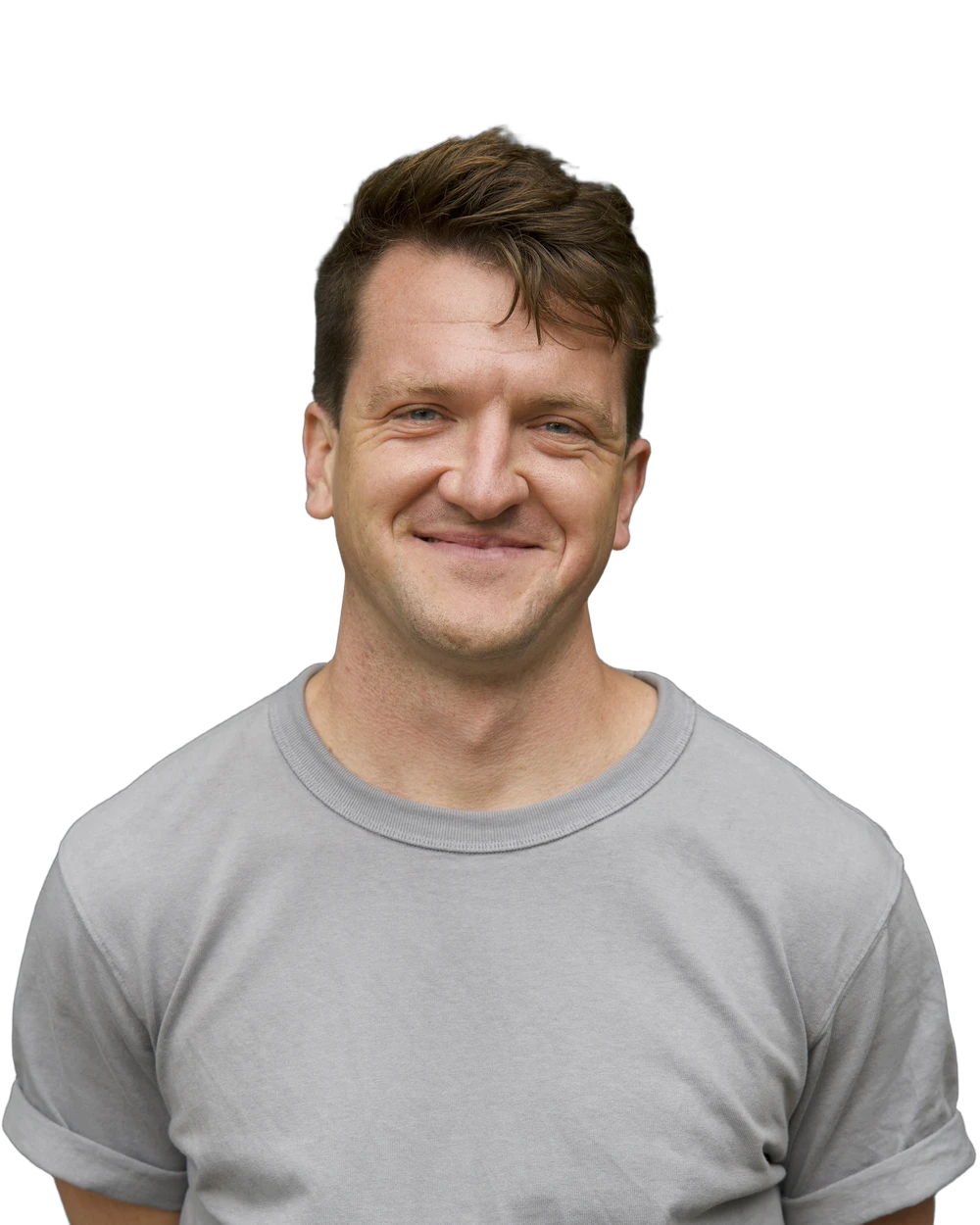
Unplugged co-founder Hector Hughes on getting customers to sell for you, co-branded cabins with Healf and Big Green Egg, and funding each cabin with a £50k private loan.
What you'll learn
- Why a product that makes people feel something is easier to talk about, and how to design for it.
- How the Instax photos and repeat-stay touches keep Unplugged in people's conversations.
- How the Healf and Big Green Egg cabins came about, and how to pitch a brand partnership.
- How Hector funds each cabin with a one-page private loan of £50k, secured against the cabin.
- Why silver bullets are usually procrastination, and the case for lead bullets.
- Burnout, sobriety and recovery, and why asking for help has been so powerful for Hector.
- The one number that runs Unplugged, and why 50 cabins next year is enough.
Get the next one in your inbox
One email a week on what founders like Hector Hughes are learning, plus the investor map and every playbook. Free.
Questions this episode answers
How do you get customers to recommend your product?
Design the product to make people feel something. Hector Hughes, co-founder and CEO of Unplugged, says taking guests' phones away for three days provokes a reaction either way, and the aim is for guests to tell 10 or 20 people instead of one. Small extras like Instax photos give them something to take home and show friends.
How do you set up a brand partnership as a small company?
Make the other brand look great. Hector says Unplugged did all the build and set-up for its Healf and Big Green Egg cabins, and the partner mainly sent product. The better the partner looks, the more they talk about it. Ideas that come from the partner are easier to get done, but don't ask, don't get.
How do you fund a capital-intensive business that isn't EIS-eligible?
Finance the asset instead of the company. Hector says Unplugged doesn't qualify for EIS, doesn't fit a VC timeline and found asset finance too expensive. It created a one-page private loan product: investors who knew the business lend £50k per cabin, each loan secured against a cabin.
What is a lead bullet in business?
A phrase from Ben Horowitz's The Hard Thing About Hard Things: sometimes there is no silver bullet, only steady work on the core problem. Hector says new product lines and side projects at Unplugged were often procrastination, and the fix was to do the main thing better and keep the business simple.
How should a founder set growth targets for a physical business?
Pick one number that everything else follows. For Hector it is cabins financed per year: his co-founder finds the sites, operations launches them and marketing fills them. He plans 50 new cabins next year, roughly doubling the estate, instead of 80 to 100, to avoid a more complicated organisation.
About Hector Hughes
- 85%+ occupancy
- Across the last two and a half years, with some months at 95% (Unplugged)
- 100% direct bookings
- Every stay is booked through Unplugged's own channels (Unplugged)
Hector Hughes is co-founder and CEO of Unplugged, the off-grid cabins where guests lock their phone away for three days of digital detox. He started Unplugged in 2020 with co-founder Ben Elliott. Seven years in, Unplugged will have over 60 cabins by the end of this year, booked more than 85% of the time, with every booking coming direct.
Transcript
Read the full conversation
Selling a high-friction experience
Will: If you've not come across Unplugged, where have you been? It's cabins in the countryside where you lock your phone away for three days of digital detox. Seven years in they'll have over 60 cabins by the end of this year. They're booked over 85% of the time and every single booking comes direct. And here's how Hector built it. Do you feel like you're riding a cultural wave in terms of people understanding the need to unplug and then you giving just a great way to do it?
Hector: Yeah, I think it's more the latter. There's a big tailwind here. But to get people to actually go and spend three days offline is hard because they've got to take time off work. If they're going with a partner, they've got to take time off work as well. There's the fear around being off your phone for three days. There's a lot of resistance there. And so I think how we overcompensate for that is we just need to make it incredibly aspirational. So as a brand, we just have to work a lot harder than a lot of other brands from marketing point of view. So someone was telling me the other day, as a brand you quite often have, you can access physical space in people's lives and mental space. And the physical space if you're a product, you might be in the retailers and people could see you out in the real world. For us, ironically, given this a critical product, because you're not walking past the cabinet in the street, it's all about grabbing people's attention online, and then getting them to do this really high friction thing. So as a result, we just really, really need to dial up and make it cool because people like the alternative. People like watching Netflix for three hours in the evening and scrolling
Why taking phones away makes people talk
Hector: through TikTok for many hours a day. And so I think we as a brand just have to work much harder.
Will: Can we talk about that? How do you fill those cabins and keep people coming back? From my point of view, I feel like I see Unplugged. I'm a tiny, tiny investor through your last crowdfund and we've got the hat and it sadly doesn't fit my massive head, but my wife and daughter both wear it and people know what it is. So how have you managed to create this movement?
Hector: Yeah, I think we've always taken the approach that fundamentally to stand out in this day and age, you need to evoke a strong emotional reaction in people. So even right back to the very first decision, which was to actually lock people's phones away. So if I say to you, you're going to go and spend three days in a cabin in the countryside, you might feel something, you might feel that would be a nice thing to do. If I say you're going to spend three days in a cabin in the countryside and we're going to take your phone off you, you're going to feel a lot more. You're either going to be like, no way that sounds terrible or get me there right now or more likely a bit of both, but it's going to make you feel something. And as a result, you're going to talk
The Instax photos that keep people talking
Hector: about it. It's just much easier to get that message to spread. And so I think over the years to answer your question, we've always just taken the approach of with every product decision we make, with every marketing decision we make, when people see this or experience this, instead of going away and telling one person, how do we do something where they go until 10 people or 20? So I think it's just really about being brave and bold and standing out.
Will: Is that another one? Is that where the Polaroids come from?
Hector: Yeah, exactly. I was actually so resistant to the Polaroid at the start, because I thought it would be such an operational headache. And the first version we had used to break all the time. My co-founder very correctly pushed that it would just be such a multiplier over time because it just gives people extra things to shout about, extra things to take home, easier to remember their experience. I still go over to a friend's house.
Keeping a product fresh for repeat customers
Hector: I went to a friend's house the other day and had all of their Instax pictures from and I'm trying to keep what yours are there. Exactly, exactly. So it just helps stay relevant with people and it's such a nice value add. And then it also has the benefit of one less reason to use your phone, right? Because we really have to design the experience so that you don't need your phone to get around or take pictures.
Will: Do you find that you have to kind of come up with a new one every year or so, so that it doesn't get stale? No, I think
Hector: we have to continue evolving because the world moves and the world changes and something that might have been novel and interesting last year is no longer. So I think as a company, we always want to be... One of the things we think about is how do you add magic to the experience? How do you make it unexpected? How do you really help it stand out in people's minds? I mean, the other thing is that we get a lot of people now who come back with a message from someone the other day and they've just completed their 15th Unplugged stay in three years, which is wild. So for these people as well, we need to keep evolving as a company. I think one way we can do that is the actual locations themselves and the cabins and continue to evolve that. So we've got people might have come to stay with us in a forest in Kent and then the next stay, they might go to the hills in Wales or by the sea in Somerset or whatever else they might want to do. And then the other big one is things like the partnerships we do and the collaboration cabins have worked really well. So again, just have all of these
The Healf cabin: how a brand partnership filled the calendar
Hector: because there's lots of reasons people might come for an Unplugged stay. They might come because they just want to read a book for three days. They might come to invest in their relationship. They might come to paint or play music or whatever it might be. And so I think we want to help build out all of those different use cases and just give people the best possible experience for each of those.
Will: Let's talk about those co-grounded cabins because it's super cool. As soon as their email landed about the Healf one, I kind of forwarded it straight away over to my wife and was excited to go and use it. How do you think about this and what's it doing for you guys as a business?
Hector: So they've been a huge success. Actually, no credit to us for coming out with it. We've always been... We had a lot of inbound on the partnership side of things. So there's a lot of opportunities and I think we're always very careful to protect brands because I think brand equity is such an important thing for us. And so I think we were generally quite resistant to the idea of doing a co-branded cabin just because we thought it might not enhance the brand. And Healf got in touch, basically got a message from one of the founders. Well, I'd been chatting to him a little bit and he said, "Why don't we do a Healf cabin?" And I had a call and I went back and chat with the team and I was like, "Ah, you know, we'll do an influencer share instead or something like that." So I went back and I was like, "I'm not sure we want to do a co-branded cabin, guys. Can't we just do something a bit more lightweight?" And they were like, "No, not interested." And they're like, "The only way we're interested in this is if we get really big with it and we do this cabin." Yeah, they really know what they want and they're good at getting after it. And actually when I thought about it, I was like, "This could actually be really cool." So I went away and made it happen. Most of it was just like last launch of a normal cabin and then they added a whole bunch of stuff and this one happened to be on grid. So it's got the ice bath, which is on grid and it's got a certain sauna. So we went a little bit above and beyond for this one. And it's just been a massive success. I think it's the benefits of the brand. It's still... We've launched a co-loved cabin since, but it's still the highest price point and the highest occupancy of our cabin. So it's just booked out all the time, months in advance. But perhaps more valuably from a brand point of view is it's just a constant... We just get a constant stream of press and influencers who wants to stay. And we generally get quite a lot of press and influencers, but there's just a whole other market. Everything around wellbeing is just so on the money for it. Similarly with the food one, with Big Green Egg, we launched this summer. It just means that you can then get into a whole new range of influencers. You can get the food influencers to come to stay, all of that kind of stuff. So it just really makes our life easy. And actually it's obviously a point of interest for our customers as well, because people have been following the brand for a while and they've maybe done some on both days and then they're really obsessed with food and they want to go stay at the food cabin or they want to go try out the Healf cabin. So yeah, it's been great. I think from our point of view, we've got another one in the pipeline we've launched in this year and got some other irons in the fire. But yeah, it's just also just again, how do you be talked about? It sticks in people's minds, right? And it's just these little things that add up. And I think the more of these things you can do, the more you just more you just increase people's, the hype around the brand for not
How to pitch a brand partnership
Hector: actually that much work. A Healf, credible
Will: brand came to you, Big Green Egg credible brand, Habitat like amazing brand. Do you ever go out on the front foot and try and think of the companies that you want to work with and find yourself having to pitch or does that really happen? And if you do, is there anything that you could share around? I don't know what makes it more likely that they're keen on collaborating with you?
Hector: Yeah, for sure. So we do a little bit. I think generally it's just more effective. If they get in touch, it was their idea. It's just easier to make it happen. And I think generally, how to generally approach partnerships is you want to make the other party look really good. And the better they look, the more they're going to shout about it. And yeah, I think quite often brands can be too focused on what can they gain from the partnership. And I actually think it's really about... So for those CoLab calendars, for example, we basically did all the work, did all the setup and just got them to send some stuff and just made it look as great as possible because then it just gives them a good story to tell as well. And I think being on the receiving end as well, the partnership stuff, so just thinking about brands approaching us, the ones where always the most enticing is when people have really gone for something big that will make both brands look great. But yeah, we're always thinking about partnerships, both ones that come in, but also thinking about who we can get in touch with as well. And I also think there's a bit of a don't ask, don't get. So I just think
Funding a capital-hungry business without VCs
Hector: you've got to try it and you never know.
Will: Can we talk a little bit about funding a business like this? It just seems all very, very capital intensive and potentially pretty difficult to fundraise against when you are against a bunch of people saying, "Hey, I've got this AI workflow tool that I just five code and then it prints me millions of pounds."
Hector: With difficulty at the start, for sure. I think we spent a long time trying to access the wrong types of capital because we're not EIS, which is where a lot of angel investing happens. It's a fantastic tax scheme. We're not really a VC play just because of the cumbersome real world rollout and the time frames. Actually, there's a big 15, 20 year opportunity. Most VCs need to get their money back in five or six. So it just doesn't really fit that market. And then we went for not owning the land. So for this, as with any location business, it is location, location, location. And for us, actually, the aesthetics of the location are really important. So the really beautiful wooden clearings, they're often not for sale. So it's hard enough to get sides. Again, we've built a really good network now of actually getting land partners in place, but it would just make our lives 10 times harder again if we had to buy the sites. Because quite often, it's just a muddy field that's for sale rather than the beautiful spot. So basically, it's financing the cabins is the big one. And then sustaining burn of a growing startup, which was the case for a few years. So I think we did the classic startup rounds. We did a pre-seed, a seed round, some sort of a seed plus, whatever you want to call it. So we've done a few of those over the years and actually got to a stage now where it's basically just capex. We're pretty much a break even. And it's fundamentally just about financing the cabins from here. And you can basically
The £50k loan secured against each cabin
Hector: do that with debt. But what really helped us in the last three years is we basically just had to get creative because got to a stage where we slightly tapped out on the equity side of things, couldn't really get debt from any institutions. And as our finances were charging us debt, which was a super high APR, super high interest rate. And you had to pay it back very aggressively. So you just lose money on every cabin. And so we thought, why not just offer a lower but still attractive rate to private individuals. So we created a financial product, which is a very fancy way of saying just a one page or just a private loan product basically for investors that we knew or had a relationship with and then got them to finance the cabins. So we basically did a 50K loan by private investors with each one secured against the cabin. And that worked really well. So that massively unlocked the last couple of years of growth. And then now as we're getting to a more established stage, it's just about getting in just in a final stage of the zone at the moment of just getting a longer term facility in place basically.
Will: That feels like such a smart unlock. And I'm sure you got there through lots of bumping off the sides and pain and necessity. And I'm sure when I say, "Hey, beautiful neat business model you set up there." Because we had to and it was the way that was left. But that feels like a massive unlock. Going back, would you have almost started the business on that model?
Hector: Yeah, for sure. For sure. That was one of the big breakthroughs in the life. I've only been going for seven years now. So there's been a lot of pain along the way. But that was a big breakthrough if we hadn't stumbled upon that. And it was through trying stuff and failing. We tried. So actually some guests got in touch and said, "Hey, I have a great stay. I want to finance a cabin by buying the cabin basically." So we tried selling him a cabin. We tried that model. That's a bit messy. We tried an asset light model where the cabin manufacturer owns the cabin. So we tried all of these things and then just found that the cleanest way to do it was just as this private loan. So that was a game changer. But it was many years of trying and failing at stuff and eventually stumbling on something that worked and we
Healthier Notes
Hector: can
Will: scale. Hello, quick one from me. If you want Hector's cabin loan model written up as a one-page playbook, it's in this week's Healthier Notes. It's a free weekly email to help you grow your company. Then you can get it if you go to healthierco.com and sign up. See you there.
Silver bullets and lead bullets
Will: There must have been times when you, I don't know, you're looking at how to fund the next phase of the business and it's like shit, maybe that's the VCs and you start doing the massive world building and you find yourself talking about how Unplugged is like, actually, it's not three days in a cabin without their devices. It's a whole new platform for experiencing X, Y, and Z. Have you managed to stay immune to all of that stuff? No, I've fallen into that trap time and time and time and time again. It's very easy for me to spout off on a podcast now about the importance of focus, but the lived experience has been very different. Within six months, we launched our first cabin in the pandemic and so within six months, we decided we need to have some sort of at-home offering as well. So we started developing that. I've gotten that every rabbit hole over the years. There was one time when I got so fixated with the idea that we needed to do a big Unplugged, Soho Farmhouse type thing, go buy a country estate and create this thing. And honestly, it's all just been procrastination from solving the main thing because I think startups get hard and the problems are trying to solve get hard and there are times when the unique numbers haven't really worked or it's felt impossible to get the financing for cabins or it's felt impossible to get the sites or whatever it might be. And so then I think as founders, we tend to look for silver bullets. If only we can go and do this and watch this other product line, then that will save us. And actually, my experience looking back is always it's just about doing a better job with the main thing and you just got to roll up your sleeves. There's a great chapter in the hard thing about hard things by Ben Horowitz, which has to be my favorite startup book where he talks about lead bullets. Yeah, great, great, great, but I'll read that one whenever we're in a tight spot. And he talks about lead bullets, which is like sometimes there is no silver bullet, you just got to use the lead bullets. And I think that really applies. So I think it's about being really ruthless, keeping it simple and just focusing and doing one thing really well versus the noise. Obviously, there's many different ways to do it
Making three days offline culturally significant
Will: and different games are in, but for us and what we're trying to do, I think the big opportunity is to become... It's to make the three days offline culturally significant. So it becomes being unplugged is synonymous with switching off like Uber-ing is to getting around. And for us, it's just about doing that one thing increasingly better and better each time and adding magic to that.
Hector: Yeah, so I think over a long time, learning better when it's just like, you just get these impulses, this very kind of... Yeah, I guess impulses is the right word for it. I need to go do this, we need to do this. And I think that often comes from a place of fear and fundamentally insecurity of like, I can't figure out the main thing. So I think a lot of it is just like understanding, are we... Am I just making myself believe this because I don't know how to solve it the other way. And so I think we're really good at fooling ourselves. So I think a lot of it is just getting honest with yourself. Because if I really look back like deep, deep, deep down, I knew that it wasn't the right thing. But I also knew I didn't have the courage to face that at that time. So I had to go and distract myself for months and months and months. So I think a lot of it is having the courage to keep it simple. But now it's just a good rule of thumb where the rule of thumb is simplest is best. And so it would have to take something quite special to pull this from that now. And actually, that's just the plan where it's getting on now. And I think that's a deviation from the current business model. I'm not that interested in that. You also just... I think you grow more cynical and gain some experience along the way where you've just seen all these things that sound great and they sound like magic solutions. You've just seen how messy it is when you actually play it out. And so after a while, it's like, I've seen how
Burnout, sobriety and founder recovery
Hector: this game plays out.
Will: You're one of the most thoughtful and introspective founders that I know. How have you, do you think you've changed over the course of the seven years of running Unplugged in response to the responsibilities that it's put on you or in response to the strains it's put on you or in response to like, you now need to run and grow this thing. Have you adapted as a person, as a leader in order to make that happen?
Hector: Yeah, I've actually changed a lot, especially in the last year and a half or so. It really brought me to my knees after a long period. I remember when we were raising a pre-seed back in 2021, an investor said something along the lines of, "I like you, but you need to be kicked a few times. You've got this naive optimism and you need lies to deal you some tough blows." And that happened over the years to come. We've spoken a lot about it, but my own journey during the startup's time is I went sober when I started Unplugged and actually got quite ill shortly after that. So a few months after it. And then just got progressively more sick over a three or four year period and really, really brought me to my knees that everything was a strain, work was a strain. We were constantly running out of money, health was a strain, relationships were a strain. And it was really humbling. I just felt like I was gritting my teeth and trying to turn up each day and endure basically. And then that just led to a bit of a rock bottom and via a very direct therapist, I basically just started to actually deal with my shit, for lack of a better word. So yeah, this is probably a year and a half ago, just started to... I was in an unhealthy relationship at the time. Therapist called that out very quickly. So I ended that. And then he just said, "I want to know why you get yourself in such situations. Why are you running yourself into the ground financially, getting in these bad relationships, living in these moldy houses with these health issues?" And fundamentally, I think it all comes down to as a young boy, being emotional and embarrassed about that, and learning a lesson that I need to bury that away and basically give off this facade to the world that all is well, and I've got this. And I think that's always what I've had a lot of pride in as a person, as a founder, which is like being unflappable basically. So whatever happened, whatever life threw at me, just being able to rise above it and take it in my stride. And I think the problem was that it was all taking a toll. And so I think over the course of many years, it really did just bring me to my knees. And so yeah, the last year and a half, I basically found my way into addiction recovery, so a 12-step program. And that has just been a huge rewiring of me and who I am as a person and realize what a people pleaser I've always been, how driven by fear I've always been. I think often the most ambitious people are after the most fearful people as well. And I wouldn't have said two years ago that I was a fearful person, because I'd always lived this very risk-taking life. And actually, what I thought was bravery was just recklessness. And now I see courage as not doing the risky thing, but feeling the fear and maybe feeling sick to your stomach with it and doing the right thing anyway. So I definitely think I'm learning now what true courage actually is. And as I said earlier, I think keeping it simple and saying no to stuff and having hard conversations that need to be had, that all takes courage. And as a leader, I was not good at that for a long time. And so that's been a big evolution. And patience is a huge thing as well. I've always been so impatient. And I think it can be a virtue as a founder because you need disurgency. But I also think I'm much less or decreasing the interest in the long-term outcome and where we need to get to. There's much more taking it day by day and just taking the next right step and just betting in for the long term. And I think there's an amazing opportunity over the next 15, 20 years to build something special. And there's such a cult in the startup world of just quick wins and selling a company for five or six years and then going and starting jumping on the next wave and starting the next AI company or whatever it is. And I just have no interest in doing that. And I think it ends up being a massive advantage if you can just take a much longer term to you. But there are some other cabin players out there that are in digital detail to very similar cabins and know them all quite well that they're all desperately looking for an exit in the next couple of years. And yeah, it's just not the game we're playing. And yeah, again, I have no interest in
Being open as a founder
Hector: competing with others and much, much rather run our own race.
Will: You've been really open here and I know you and you've been really open other times you've talked publicly. What's the experience been of being more open, more honest, more true to yourself over the last 18 months? Yeah, so
Hector: it's been an incredibly positive experience in all, I think. But the hardest thing and where it all stems from is being honest with yourself and being honest with myself. And I think if I can do that, then because we have all these voices inside, you know, what you're saying there around, I think we feel as leaders that can't possibly share that we might be going through some of this stuff or that we might be sort of fear or whatever it might be because of a message that gives off to the team. And I think quite often when you get to the root of that, it's wrong. And actually, it's just us. It's our egos trying to protect ourselves. And so creating some nonsense that people are going to care or they're going to reject us or, you know, the team is going to leave because they say that they used to have addiction issues with alcohol or whatever it might be. And actually, no one cares that much. And fundamentally, there's a big difference between saying like, between saying, I'm feeling really bad and I can't do this anymore. And I'm going to step away, which might be the right thing for some people. But what I'm saying here is I'm dealing with my stuff so that I can be there for the team and be there for all the people I'm working with and go and do this and deliver on this. And so it's basically facing up to the stuff and being honest about this stuff is a way of better being there for the people in my life and the people I work with rather than doing the opposite and rather than being like, I'm going through so much. So, you know, you guys have to do all the work. And I think the more honest I can be whenever I'm suffering, it's actually because whenever I'm stressing about something work, it's usually because there's something I'm not getting honest about either with myself or others. And so yeah, it's always the it's like FDR said, but the only thing to fear is fear itself. And quite often is the fear of what might happen rather than the reality that we get caught up in the
Will: questions or exercises or like kind of journaling prompts that anything like that that you use when you when you catch yourself in this these
Asking for help as a founder
Will: kind of fearful things creeping in.
Hector: It's really interesting. One thing I've learned through addiction recovery is picking up the phone to people. I think a lot of founders myself included are bad asking for help. Because I've always felt that I have to give off this illusion that I've got everything and everything's handled. And I think having the humility to just ring up the phone to another human and just share really what's going on has been has been incredibly powerful. So I think I wouldn't underestimate that. And yeah, I think the other thing is just like journal is great, because you can just get out there's something very powerful about just getting stuff down on paper, because then you're admitting it to yourself. And so I think that is the that is the big thing is just start to tease out what's actually going on. And, and just take the time to reflect because I think for lots of founders and myself at times, it's very easy to just, when you're feeling worse is when we busy ourselves, basically. When I'm on my busiest is also when I'm on my most insecure, I'm on my most full of fear, because there's a bit of like, I don't know, makes us feel better about ourselves if we can just be busy, because it's like, well, at least I'm doing something about whatever the thing I don't want to face is. So a lot of the time, it's actually just letting what needs to come up come up. And yeah, not to sound like I'm pushing my own hand, whatever shop, but often going spending a
One number that runs the company
Hector: few days offline is a good way to do that. And
Will: I want to finish this off with with where Unplugged goes from here. And could you talk about where you like where you're trying to get to now? And how do you do you operate?
Hector: It's quite straightforward, because you basically have the number of cabins, and everything trickles down from that. So we have, for marketing, it's about filling the cabins we have. So there's occupancy targets. And for ops, it's about launching the cabins that we've paid for. And the paying for is really down to me. So fundamentally, it's how many cabins can we get financed in a year. And then it's pretty straightforward what the team needs to do off the back of that. And then things like the collab cabins we do and the partnerships we do, those do just, they do just emerge. So it doesn't need to be massively like, yeah, we don't really need to have a complicated. So for example, I'm planning to get 50 cabins financed for next year, it will be down to the ops team to get those live in a timely manner, it will be down to my co founder to get the sites in a timely manner. And it will be down to the marketing team to fill them as best they can. So it's, yeah, it doesn't need
Why 50 cabins next year
Hector: to be more complicated.
Will: And that 50 number comes from your capacity or comes from your belief on how ready the UK is to spend time in cabins or comes from...
Hector: We've always been massively oversubscribed on the demand side of things. So the occupancy has always been super high. And I think second half of this year, it will probably be half on the second half of last year with more cabins. So it's very unlikely that we'll hit some magic capacity limit next year. And so we basically like the limitation is supply. And so we want to be scaling supply at a good rate. Why 50 instead of so we'll be at 60 cabins over this year, 50 feels 40 or 50 feels like good number. If we did 80 or 100, then it's just a bit too much of a ramp versus where we are now. And we just, we could do it, but we'd have to hire more aggressively. And you just you just end up creating a more complicated organization. And again, like, I'm not in a massive rush, you know, if we can do 50 cabins next year, nearly double the number cabins, double the revenue, more than double the gross profit, it's we're going to be in a very good place. So I think it comes back to that patient piece, patient's piece, which is like the ego might be like, "Oh my God, we could 3X it or 4X it next year." But honestly, if we can just keep doing this for the next 10, 15 years, then
Will: we're going to be in a very good, very good state. That was Hector Hughes from Unplugged. Hopefully you enjoyed it and got some value from it. And if you did, then you're going to love all the episodes that we've got coming. So hit subscribe, hit follow, and head to healthierco.com to stay in the loop. See you next time.